 Boarding School
A boarding school book is a story where the school is the world. Students sleep, eat, study and quarrel under the same roof, so the institution's rules, traditions and rumours do the work a city or small town would do in other novels. Readers search for it as the boarding school trope, boarding school mystery or school with secrets, and the idea is always the same: a closed community where everyone is watching everyone else.
A campus has no exits
Readers like the pressure. When a student cannot simply go home after a bad night, every friendship and grudge weighs more, and a small slight in the dining hall can feel like a declaration of war. The school also supplies a ready-made hierarchy of prefects, teachers and older kids who seem to know everything, so the story gets its shape almost for free.
Mystery writers like it for the same reason. A crime in a city has a thousand suspects. A crime on a campus has a dozen, and each had a dormitory key, a reason to be out after lights-out and a teacher who did not ask questions.
The usual cast
Most of these books share a few parts: a newcomer who does not fit in, insiders with their own codes, an adult or two who may or may not be on anyone's side, and a secret the school would rather keep. The newcomer is the reader's guide, which lets the author explain the place without stopping for a lecture.
The best versions treat the school as a character with loyalties of its own. In some it shelters the students, and in others it trims them to fit a mould. The more the institution has to hide, the more the plot can squeeze out of one hallway.
Five schools worth enrolling in
“Truly Devious” is the mystery pick. Stevie Bell wins a place at Ellingham Academy, a remote Vermont school for gifted students, because she is obsessed with its famous unsolved case: in 1936 the founder's wife and daughter disappeared, leaving a taunting riddle. Soon after Stevie arrives, a new death proves the mystery is not over.
“Anna and the French Kiss” swaps gloom for a senior year in Paris. Anna barely speaks French and misses home, so the school is where she has to build a life from scratch. Her feelings for Étienne, a charming classmate who is already taken, make staying just friends harder every day.
“Looking for Alaska” is the older, heavier version. Miles Halter leaves Florida for a school in Alabama, drawn by the last words of famous people, and joins a tight circle of friends that includes the reckless Alaska Young. Go in knowing it is about loss and guilt, and that the tone turns sad.
“Every Heart a Doorway” sends children who came back from magical worlds to Eleanor West's home, a place where they can finally belong. It is more about belonging than boarding, but the campus rules and small community make it feel like a boarding school in the best way.
“The School for Good and Evil” adds a fairy-tale twist. Every year two children are taken to the school, one to train as a hero and one as a villain, and best friends Sophie and Agatha are sure they know which is which. The school has other plans.
For a grown-up take, Curtis Sittenfeld's Prep (2005) follows Lee Fiora, a girl from Indiana who enrols at Ault, an elite school near Boston. It is a wry book about class and fitting in, not a mystery, which makes a useful contrast to the rest.
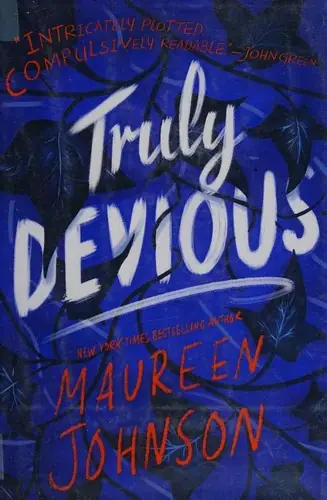
Truly Devious
Maureen Johnson
2018

Anna and the French Kiss
Stephanie Perkins
2010

Looking for Alaska
John Green
2005
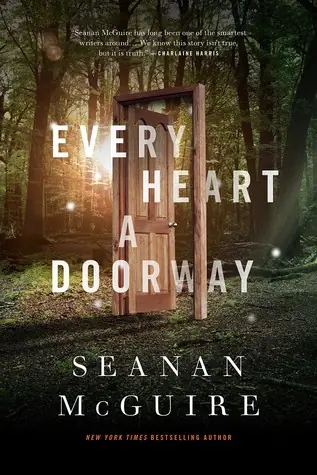
Every Heart a Doorway
Seanan McGuire
2016
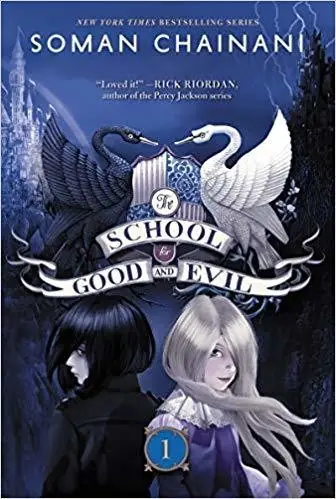
The School for Good and Evil
Soman Chainani
2013
When the gates start to feel familiar
Some readers tire of the same few settings: the cold school in the mountains, the rich clique, the one teacher who knows too much. A boarding school with no real stakes turns into a costume party. The mystery version has its own problem. The solution has to feel like something the clues could have pointed to, not something the author pulled out of a drawer at the last minute.
Age is the other sore point. Campus settings usually mean teenage characters, and a romance among students needs a clear sense of how old everyone is. Check the characters' ages in the blurb, and do not assume a school setting always means a young adult story.
Where to start
If you want a puzzle, begin with “Truly Devious”. For the gentlest romance, “Anna and the French Kiss” is a safe bet, and “Looking for Alaska” is the one to pick when you want something quieter and sadder. For a sly fairy-tale twist, try “The School for Good and Evil”.
Find books with the “Boarding School” trope
13 books in the catalog. Add and exclude tropes, filter by genre and year.
Open in search

Frequently asked questions
What does boarding school mean in books?
It is a story set at a school where students live on campus for most of the year. The school becomes a world of its own, with its own rules, hierarchy and gossip, and the plot usually grows out of what happens inside it.
Is a boarding school book always a mystery?
No. Some are coming-of-age stories or romances that use the school mainly as a backdrop. Mysteries are common because a closed community full of secrets is a natural place for something to go wrong.
How is boarding school different from dark academia?
Boarding school stories focus on the school as a place to live. Dark academia focuses on an elite, often old-fashioned institution and a love of learning that turns sour. The two overlap a lot, so the blurb tells you more than the label.
Which boarding school book should I read first?
For a contemporary mystery, try Truly Devious. For a sweet, light romance, Anna and the French Kiss. If you want a fantasy twist, The School for Good and Evil is a fun place to begin.