 Philosophical
A philosophical book asks what a life is for, what counts as right, and what makes us human, and then lets its characters or narrator think about those questions instead of settling them. It is less a genre than a kind of attention a story pays. Readers look for it as philosophical books, philosophical fiction, or thought-provoking novels, and it shows up in literary fiction, science fiction, and older classics.
The question has to be in the plot
Philosophical fiction works best when the question drives events. A character who must decide whether to save a city at the cost of a principle is doing philosophy, even if the word never appears. The strongest books make the reader do some of the thinking and trust you to follow an argument across a whole chapter.
The trap is the lecture. When a character becomes a mouthpiece for an idea, the story stops moving and the reader starts to skim. The books that succeed keep their people messy, sometimes wrong, and interesting in their contradictions.
Why read ideas in a novel at all
Many readers want to think through a hard problem without the apparatus of a textbook. A novel can hold a dilemma in your head for days in a way an essay rarely does, because you live with the characters through the consequences.
Fiction is also free to test an idea in an impossible place: a spaceship, a monastery on a distant moon, a family dinner that goes wrong. The reader sees the idea in use, not just described.
Three neighbourhoods where the questions live
- Science fiction, where the future is a laboratory for ethical questions about climate, machines, and what we owe our descendants.
- Literary fiction, where a quiet domestic setting carries a large question about memory, choice, or despair.
- Classic novels, where a family or a town becomes a stage for arguments about faith and guilt.
Science fiction makes the questions larger, literary fiction makes them intimate, and the classics make them hard to avoid.
Four books that think out loud
“A Psalm for the Wild-Built” is short and warm. A tea monk who serves travellers on a distant moon meets a robot that has spent centuries in the wild, and the two travel together while the monk tries to answer the robot's question: what do people need? Becky Chambers keeps it gentle, and it rewards readers who like small reflective stories.
“I'm Thinking of Ending Things” is more unsettling. A man and his girlfriend drive to his parents' remote farm so she can meet them. Through the long winter journey she keeps turning over a private thought about ending the relationship, while small details around them begin to feel wrong. Iain Reid builds a whole book out of that unease.
“The Ministry for the Future” takes the wide view. A climate crisis is already killing people when a new international ministry is created to protect future generations. Kim Stanley Robinson fills it with scientists, economists, activists, and officials arguing about how to keep the planet livable, and he cares more about those debates than about tidy heroes.
“A Half-Built Garden” brings the question of leaving Earth into a diplomatic setting. In 2083 a pregnant diplomat meets alien visitors who want humanity to abandon the planet, and her community debates what consent and survival actually require. Ruthanna Emrys makes ethics a matter of negotiation.
Outside the catalog, Fyodor Dostoevsky's The Brothers Karamazov is the classic philosophical novel. A family conflict becomes a wide study of faith, free will, and suffering. It is long, but many readers find the ideas more alive than they expected.
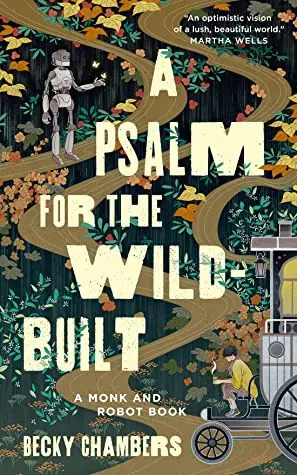
A Psalm for the Wild-Built
Becky Chambers
2021
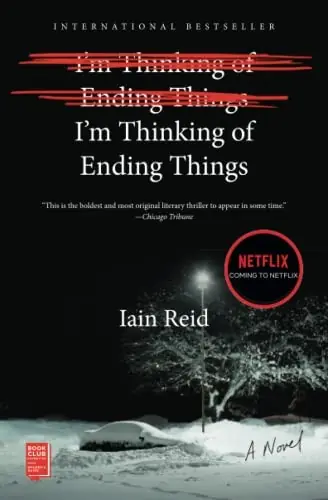
I'm Thinking of Ending Things
Iain Reid
2016
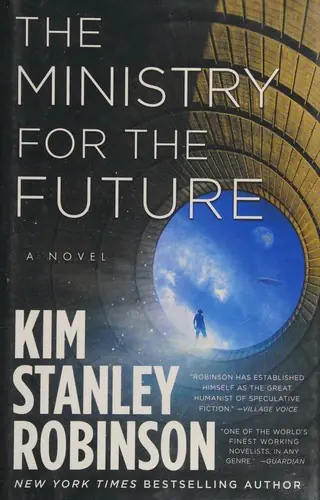
The Ministry for the Future
Kim Stanley Robinson
2020
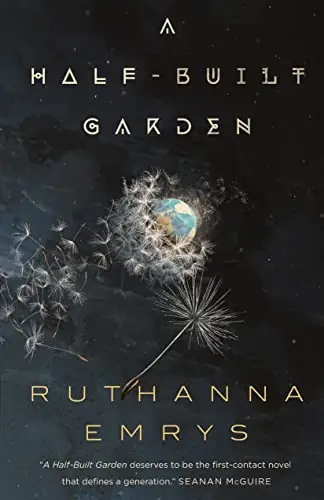
A Half-Built Garden
Ruthanna Emrys
2022
When there is more argument than story
The common complaint is the book that is all idea and no story. If the characters exist only to voice opinions, patience runs out fast. A good philosophical novel gives its people wants, fears, and a reason to act.
The other complaint is a conclusion that feels pre-decided. When the author has already made up their mind, the questions stop being questions and the reader feels steered. The most rewarding books leave you arguing with them afterwards.
A short way in
For a short and gentle read, “A Psalm for the Wild-Built” is easy to pick up. For a bigger, more demanding book about the future, try “The Ministry for the Future” next.
More novels that make you think
81 books in the catalog. Add and exclude tropes, filter by genre and year.
Open in search
Frequently asked questions
What does philosophical mean in books?
It means the story asks big questions about meaning, ethics, or what it means to be human, and lets its characters argue or reflect on them. The ideas are part of the plot rather than decoration.
Are philosophical books hard to read?
Some are slow, but many are plain prose with a lot of thinking inside. Start with one that has a strong story, and let the ideas come as the plot moves along.
Is philosophical fiction the same as literary fiction?
They overlap. Literary fiction focuses on craft, while philosophical fiction focuses on questions. Many books do both, and some are mainly science fiction or fantasy with a philosophical core.
Which philosophical novel is a good first read?
A Psalm for the Wild-Built is short and warm, with a gentle question at its centre. The Brothers Karamazov is a longer option for readers who want a classic.