 Prophecy
A prophecy is a foretelling that shapes a character's fate, and the trope is about what they do with it. Some characters follow the prediction because they believe in it, some fight it, and some find out the words meant something other than what everyone assumed. Readers look for it as the prophecy trope, ancient prophecy, or prophecy fantasy books, and it runs through epic fantasy, young adult, and romantasy alike.
What it means to know the ending in advance
Prophecy has a built-in tension. If the reader knows what is supposed to happen, every choice the character makes becomes a question: are they walking into the trap, or away from it? The pleasure lies in the gap between destiny and free will.
There is dramatic irony as well. When a prophecy is spoken in a crowded hall and everyone pretends not to take it seriously, the reader watches the fear spread underneath.
Good prophecy stories keep the wording loose enough to be misread. A line that sounds clear in chapter one can mean something else by chapter twenty, and that slippage gives the story room to surprise you. Readers who like puzzles tend to enjoy this part most.
Obey it, fight it, or find out who wrote it
Prophecies usually work in one of three directions, and the choice shapes the whole book.
- The character obeys, and the prophecy comes true partly because they tried to make it happen.
- The character resists, and the act of resisting fulfils the prediction.
- The prophecy turns out to be a tool someone else is using to control people.
The third interests me most. It turns a mystical rule into a political one and asks who benefits when people believe they have no choice. chosen one is the closest neighbour, but a chosen one is a person singled out, while a prophecy is a text that can be argued over.
Four books built around a prediction
“The Raven Boys” is a good contemporary starting point. Blue has grown up in a house of psychics and is warned she will cause her true love's death. She is drawn into the search for a lost Welsh king with a group of boys from a prestigious school, and Maggie Stiefvater gives it an eerie, small-town mood instead of an epic one.
“Black Sun” takes the trope to a larger stage. In the city of Tova a solar eclipse is coming, and with it an old prophecy of a god reborn. Xiala, a disgraced sea captain, is ordered to carry a strange young man to the city, while Serapio has been shaped since childhood for a ceremony he does not fully understand. The eclipse works as the clock.
“The Priory of the Orange Tree” is the long, dense option. In the East, Queen Sabran must keep the line of Berethnet alive to hold back the Nameless One. In the West, the mage Ead secretly guards her, and in the South a dragon rider's daughter grows up in hiding. Samantha Shannon's cast is big enough that you follow several threads at once.
“This Woven Kingdom” keeps the prophecy close to the chest. Alizeh hides in plain sight as a servant, keeping the secret that she is heir to a lost magical kingdom and the subject of a prophecy she wants no part of. Kamran, the crown prince, does not know who she truly is. Tahereh Mafi makes the stakes personal.
Outside the catalog, J. K. Rowling's Harry Potter and the Order of the Phoenix (2003) is one of the best-known prophecy plots in modern fantasy. A few words about Harry and Voldemort reshape the whole book.
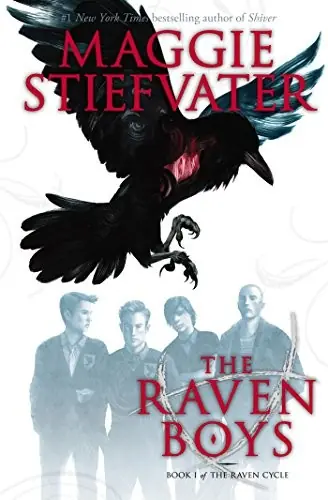
The Raven Boys
Maggie Stiefvater
2012
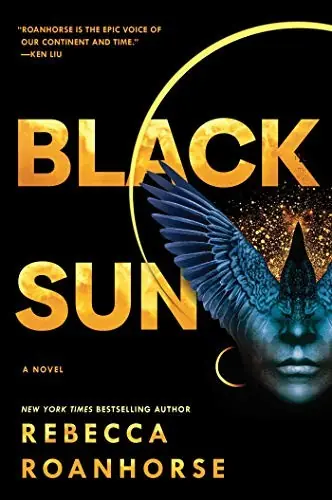
Black Sun
Rebecca Roanhorse
2020
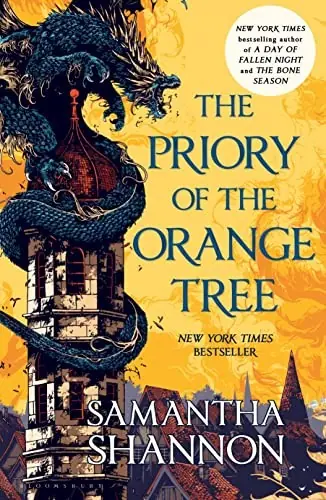
The Priory of the Orange Tree
Samantha Shannon
2019
This Woven Kingdom
Tahereh Mafi
2022
When fate is just a shortcut
The common complaint is the prophecy that is only a plot device. If the story says a destiny exists but the characters never wrestle with it, the trope becomes a shortcut. Prophecy works best when the characters argue about what it means and whether to trust it.
Length is another. Prophecy plots often run through a series, so the big payoff can wait several books. If you dislike slow series, check whether the first volume resolves anything on its own.
The last frustration is a structure where every choice turns out to have been foreseen. Over several hundred pages that drains the tension, because the reader stops believing any choice could have gone another way.
Choose a volume, not a destiny
For a contemporary entry, “The Raven Boys” is easy to pick up. For an epic that takes its time, “The Priory of the Orange Tree” is the one to commit to. Either way, read the first pages before you decide, since prophecy books live or die by their opening voice.
More books where fate is written down
22 books in the catalog. Add and exclude tropes, filter by genre and year.
Open in search

Frequently asked questions
What does prophecy mean in books?
A prophecy is a prediction that shapes a character's life. The story turns on whether the character obeys it, tries to escape it, or discovers that it means something different from what everyone assumed.
What is the difference between a prophecy and a chosen one story?
A chosen one story usually names a single destined person. A prophecy story can be about anyone the prediction touches, and it often asks whether the prediction is true or whether it is being used to control people.
Are prophecy books always high fantasy?
Most are, but the trope also appears in contemporary and young adult novels, where a psychic warning or an old family curse does the same job as a formal prophecy.
Which prophecy book should I try first?
The Raven Boys suits readers who want a contemporary setting with a prophecy at the centre. The Priory of the Orange Tree suits those who want a long, dense epic.